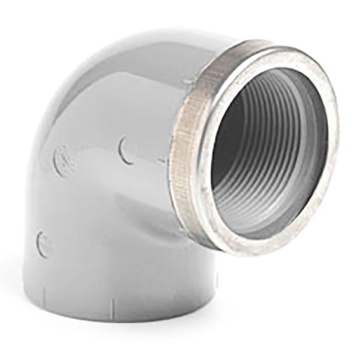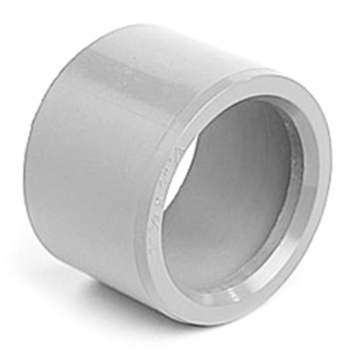
Pipe Fittings
Our range of Corzan CPVC pipe fittings is designed for demanding industrial and process environments where high temperatures, aggressive chemicals and long-term reliability are critical. Manufactured from chlorinated polyvinyl chloride (CPVC), these fittings form part of a fully matched Corzan system, offering exceptional performance, durability and ease of installation.
Supplied by Durapipe UK, Corzan CPVC fittings are trusted across industries including chemical processing, water treatment, food & beverage production and industrial effluent handling. Whether you’re building a new system or upgrading an existing one, Corzan provides a dependable, cost-effective alternative to metal pipework.
Key Features & Technical Specification
- Material: Chlorinated polyvinyl chloride (CPVC)
- Operating temperature range: 5°C to 95°C
- Pressure rating: Up to 16 bar
- Approvals: WRAS approved, WRc tested
- Quality assurance: Manufactured under BS EN ISO 9001 quality systems
- Availability: Extensive range of fittings to suit full system builds
These fittings are engineered to maintain strength and chemical resistance at elevated temperatures, making them ideal for hot corrosive liquids where traditional plastics or metals may fail.
Why Choose Corzan CPVC Fittings?
Highest specification material
Durapipe Corzan is the registered trade name for Noveon’s premium PVC-C compound. Its carefully balanced formulation delivers:
- Long service life
- Reduced maintenance costs
- Lower downtime compared to traditional materials
Ideal for hot corrosive chemicals
Corzan CPVC offers an outstanding balance of:
- Chemical resistance
- Working pressure at high temperatures
- Competitive installed cost
This makes it particularly suitable for handling strong acids, alkalis and aggressive effluents.
Non-toxic & taint free
- No harmful metallic stabilisers
- Suitable for potable water systems
- WRc listed and WRAS approved
- Safe for food, beverage and medical applications (testing recommended for taste- or aroma-sensitive media)
Smooth bore & excellent flow
- Low friction losses
- Reduced pressure drop
- Inhibits scale formation
- Improves pump efficiency and reduces energy consumption
Abrasion resistant
Corzan CPVC withstands erosion from aggressive slurries far better than many metal alternatives.
Lightweight & easy to handle
- Around half the weight of copper
- Approximately one-sixth the weight of steel
This significantly reduces installation time and on-site handling effort.
Simple, reliable jointing
Solvent cement welding allows:
- Fast installation
- Minimal specialist training
- Easy system modification or expansion
Typical Applications
Corzan CPVC pipe fittings are widely used in systems carrying:
- Acids and alkalis
- Cooling and demineralised water
- Chemical dosing lines
- Dyes and flocculants
- Potable water
- Pulps and soap solutions
- Sterilants
- Treated and untreated effluent
Common installations include hot and cold water services, chemical processing plants, industrial waste treatment, metal finishing, pulp and paper manufacturing, and food & beverage facilities.
Corzan CPVC & Sustainability
Corzan CPVC compounds are derived primarily from common salt (63–70%) and petroleum-based materials (30–37%), resulting in lower reliance on non-renewable resources than many plastics. Its long lifespan, corrosion resistance and lightweight nature contribute to:
- Reduced material consumption
- Lower transport and installation energy
- Minimal solid waste over its lifecycle
Durapipe Corzan systems offer a highly favourable environmental balance when performance, durability and efficiency are considered together.
How to Join Corzan CPVC Pipe & Fittings (Solvent Cement Welding)
Solvent cement welding is the recommended jointing method for Corzan CPVC systems. The cement chemically softens the pipe and fitting surfaces, forming a strong, long-lasting bond when properly prepared.
1. Cut the pipe clean and square
- Use a saw or circular plastic pipe cutters
2. Remove burrs and swarf
- File a lead chamfer (15°–30°, approx. 3mm) to prevent cement being scraped away during assembly
3. Mark insertion depth
- Mark the pipe to confirm full socket penetration after assembly
4. Abrade the pipe end
- Use clean, coarse emery cloth over a length equal to the fitting socket depth
- Do not over-abrade - Corzan is designed for an interference fit
5. Abrade the fitting socket
- Lightly roughen the internal surface
6. Clean thoroughly
- Use a lint-free cloth moistened with Durapipe ECO Cleaner
7. Select the correct solvent cement
- Always use Durapipe Corzan solvent cement and read the tin label before use
8. Apply solvent cement
- Use a clean brush around half the pipe diameter
- Apply to both pipe and fitting with longitudinal strokes
- Ensure surfaces are fully coated and cement is still liquid
9. Assemble immediately
- Push pipe fully home without twisting
- Hold in place for:
- ~10 seconds (16mm)
- Up to ~45 seconds (160mm)
- A neat bead of cement should appear around the joint edge
10. Remove excess cement
- Wipe away surplus cement from the outside only
11. Seal containers
- Replace lids on cement tins promptly
12. Clean tools
- Clean brushes using ECO Cleaner
Important Notes
- Only Durapipe-approved cement must be used
- For 160mm sizes, use 3" brushes and 1-litre tins
- On 160mm joints, two installers should apply cement simultaneously
Curing & Pressure Testing
- Ideally allow 24 hours before pressure testing
- Minimum cure time: 4 hours
- Safe guide (up to 110mm, ≤20°C): 1 hour per 1 bar pressure
- For 160mm: 1½ hours per 1 bar pressure
If you require any further information, our excellent customer service team is here to help so please call us on 01794 835835.