
Check Valves
PVCu imperial check valves are designed to prevent backflow in pressure pipe systems, protecting pumps, tanks, and downstream equipment from reverse flow and potential damage. Commonly used in water treatment, industrial processing, irrigation, and general fluid handling, these valves automatically allow flow in one direction and close when flow stops or reverses.
What Is a PVCu Check Valve?
A check valve, sometimes referred to as a non-return valve, is a self-acting valve that prevents reverse flow within a pipeline. In PVCu pressure systems, they are typically installed to:
-
Protect pumps from backflow when shut down
-
Prevent contamination between process lines
-
Maintain prime in suction lines
-
Safeguard tanks and vessels from reverse discharge
Because they operate automatically without manual intervention, check valves are a simple but essential component in many imperial PVCu installations.
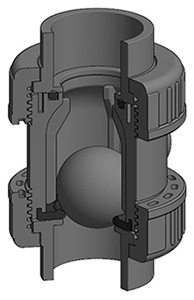
Vertically Mounted Gravity-Fed Ball Type Check Valves
These valves use a free-moving ball that rises with forward flow and drops back into position under gravity when flow stops. They are specifically designed for vertical installation in gravity-fed systems.
-
When fluid flows upward through the valve, the ball lifts off its seat, allowing full flow. Once the flow ceases, the ball drops back down onto the seat, creating a seal and preventing reverse movement.
-
Vertical pump discharge lines
-
Gravity-fed water systems
-
Sump and drainage systems
-
Low-pressure return lines
Because they rely on gravity rather than a spring mechanism, correct vertical orientation is essential for proper operation.
Spring-Loaded PVCu Check Valves
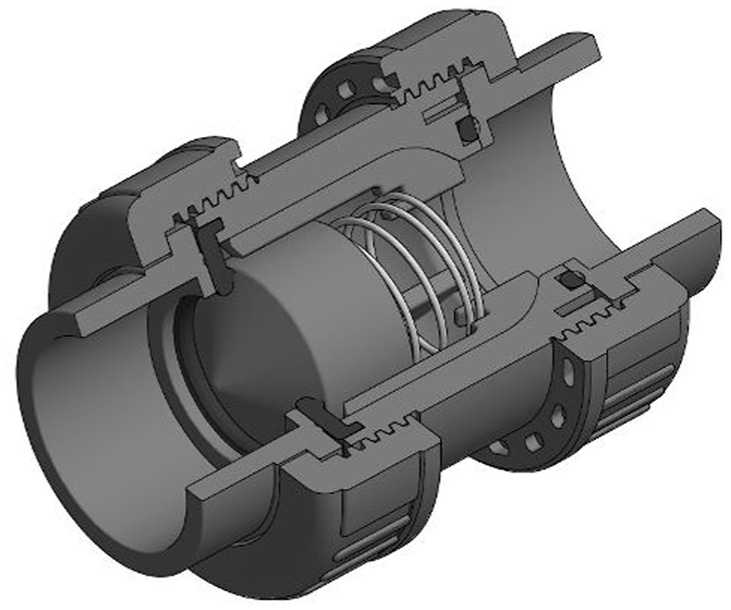
Spring check valves use an internal spring to hold the sealing element closed. When forward pressure exceeds the spring resistance, the valve opens. As soon as pressure drops, the spring forces the valve closed.
-
Can be installed in any orientation
-
Faster closing response than gravity types
-
Suitable for both horizontal and vertical pipelines
-
Reduced risk of water hammer compared to simple swing valves
-
Plain solvent-weld ends for permanently bonded joints
-
BSP threaded ends for demountable connections and integration with threaded fittings
This flexibility makes spring check valves ideal for compact plant rooms, pump skids, and industrial systems where space or pipe routing limits orientation.
Common Questions About PVCu Check Valves
- Gravity-fed ball-type valves must be installed vertically. Spring-loaded check valves can be installed in horizontal or vertical pipework.
- Many PVCu systems are suitable for potable water, provided they meet relevant approvals. Always check individual product specifications and certification requirements.
- Spring-loaded check valves can help reduce water hammer due to quicker closure, but they are not a complete substitute for dedicated anti-hammer devices in high-pressure systems.
-
Pressure ratings depend on size and design. However, the ones we offer are rated to 16 bar at 20°C.
If you require any further information, our excellent customer service team is here to help so please call us on 01794 835835.



