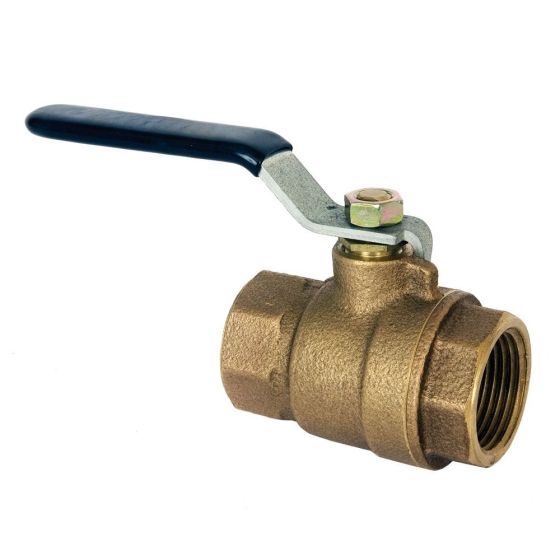
Ball Valves
Introduction to Ball Valves
Ball valves are essential components in various piping systems, renowned for their reliable shut-off and control capabilities. Utilising a rotating ball with a hole through the centre to manage the flow of liquids and gases, ball valves ensure efficient and leak-proof operation. Their versatility makes them suitable for a wide range of applications, from residential plumbing to industrial and commercial settings. This comprehensive category will guide you through the various types of ball valves, helping you find the perfect solution for your specific needs.
How Does a Ball Valve Work?
Ball valves are designed to control the flow of liquids and gases through a piping system using a simple yet effective mechanism. Here’s a step-by-step explanation of how a ball valve operates:
Construction:
- Ball: At the heart of the ball valve is a solid or hollow ball with a hole (also known as a bore) through its centre. The ball sits snugly between two seats made of materials like Teflon or rubber, ensuring a tight seal when the valve is closed.
- Valve Body: The ball is housed within a durable valve body, which can be made from various materials such as brass, stainless steel, or PVC, depending on the application.
Stem and Handle: The ball is connected to a stem, which in turn is connected to a handle or lever on the outside of the valve.
Operation:
- Open Position: When the handle is turned 90 degrees to align the hole in the ball with the flow direction of the piping, the valve is in the open position. This allows the fluid or gas to flow freely through the bore with minimal resistance.
- Closed Position: Turning the handle back 90 degrees rotates the ball so that the solid side of the ball blocks the flow, putting the valve in the closed position. This stops the flow completely, providing a reliable shut-off.
- Quarter-Turn Mechanism: The simplicity of the quarter-turn mechanism (90-degree rotation) makes ball valves easy to operate, providing quick and decisive control over the flow. This feature is particularly advantageous in applications where rapid shut-off is necessary.
- Sealing and Leak Prevention: The ball’s tight fit within the valve seats ensures that when the valve is closed, there is a complete seal, preventing any leakage. This leak-proof design is one of the key benefits of using ball valves in both high and low-pressure applications.
Benefits of Ball Valves
- Durability and Longevity: Constructed from robust materials, ball valves offer exceptional resistance to wear and corrosion, ensuring a long service life even in challenging environments.
- Easy Operation: The simple quarter-turn mechanism of ball valves allows for quick and straightforward control of flow, enhancing usability.
- Leak-Proof Seal: The spherical design ensures a tight seal, preventing leaks and ensuring efficient system operation.
- Versatility: Ball valves are suitable for a diverse range of applications, handling various media types, including water, oil, gas, and corrosive substances.
Types of Ball Valves
Ball valves come in various types based on materials and applications:
- Brass Ball Valves: Ideal for plumbing and heating applications due to their corrosion resistance and durability.
- DZR Brass Ball Valves: Enhanced corrosion resistance, suitable for aggressive water conditions.
- Stainless Steel Ball Valves: Perfect for industrial and chemical applications with high resistance to corrosion and temperature.
- Bronze Ball Valves: Used in marine and industrial environments for their strength and corrosion resistance.
- Carbon Steel Ball Valves: Designed for high-pressure and high-temperature applications in industrial settings.
- MDPE Ball Valves: Commonly used in potable water systems and gas pipelines for their lightweight and easy installation.
- PVC Ball Valves: Affordable, chemically resistant, and easy to install, used in residential and industrial applications.
- ABS Ball Valves: Lightweight and durable, suitable for chemical corrosion resistance applications.
Ball Valve Applications
Ball valves are versatile and used across various sectors, including:
- Residential Plumbing: For water supply lines, shut-off valves, and fixture connections.
- Industrial Settings: In process industries for controlling the flow of chemicals, gases, and other media.
- Commercial Buildings: For HVAC systems, fire protection, and water management systems.
- Agriculture: In irrigation systems for efficient water flow control.
- Marine Applications: Bronze ball valves are particularly suitable due to their corrosion resistance in seawater environments.
If you require any further information, our excellent customer service team is here to help so please call us on 01794 835835.